Monday, March 04, 2013

Black Grace Dance Company


The Executive Director at the Modlin Center for the Arts, Deborah Sommers, expounds upon the New Zealand-based dance company, Black Grace, and its visionary founder, Neil Ieremia. The company is coming to the Modlin Center March 7-8. Tickets are available here. 

_____________________________________________________________________________________________


I first saw Black Grace Dance Company in 2004, then an all-male dance troupe, and was quite moved by the company’s work – a fusion of dance and cultural styles with electrifying rhythms. The dancers were of exceptional athletic ability.  Today, Black Grace is not only known as New Zealand’s leading contemporary dance company, but as an internationally acclaimed group still performing powerful and expressive work that continues to inspire.

Since its inception in 1995, Black Grace has been in motion. Neil Ieremia, the Artistic Director and founder of Black Grace, was raised by Samoan parents in New Zealand. 
Growing up within this context, he became interested in dance as a way to express the stories, emotions, and concerns of the contemporary Pacific Islander.  To that end, the term ‘black’ in Black Grace refers to the courage in the New Zealand Māori-Pacific Islander argot of the 1980s.

Since 2005, Ieremia’s vision has extended beyond the original incarnation of the company. He describes the company’s evolution as transformative, and this has influenced both the span and vocabulary of his work, and the configuration of the dancers involved in each project. The dance troupe today consists of Pacific Islander, Samoan, and Maori male and female performers. 

Through a blend of styles, Ieremia’s distinctive, rhythmically-charged, and pattern-oriented choreography addresses ideas about human nature, cultural disparities, and fosters dialogue about a world and country still separated by the cultural differences of its population.  In his soul-searching exploration of identity, reflecting both his own inner search, and what it means to be the company called Black Grace, Ieremia introduces a new dance vocabulary by mixing Pacific Island traditional and contemporary dance styles.   

Ieremia has also choreographed for the Royal New Zealand Ballet, the New Zealand Symphony Orchestra and Opera New Zealand.  In 2003 he was nominated for the prestigious international Rolex Mentor Programme, and in 2005 received the Arts Foundation of New Zealand Laureate Award. He has created programs for inner city youth, and he is a 2009 recipient of the Paul D. Fleck Fellowship in the Arts from The Banff Centre, Canada.

The Modlin Center’s program includes the following work, which encompasses some of the following styles.

Pati Pati, which uses body percussion influenced by traditional Samoan Sasa (seated dance) and Fa’ataupati (slap dance).  

Amata Act 3 – an excerpt from a full-length work entitled “Amata” that explores the theme of change. The piece uses compositional structure and floor patterns based on Samoan fine mats known as “ie toga.” The mat’s linear nature and weave pattern can also be found in the movement vocabulary, which is composed of various versions of a basic language phrase derived from letters, spoken conversations, arguments, and apologies. 

The evening concludes with Vaka. This piece uses a raft as a metaphor for hope and is based on travelling and displacement.  The experience of leaving home behind, saying goodbye to loved ones, and finding yourself in a new place and culture as so many immigrants have done across time is encapsulated in this piece.  It was inspired by the controversial portrayal of Maori explorers in the infamous painting “The Arrival of the Maoris in New Zealand” by Louis J. Steele and Charles F. Goldie 1898.  

As Ieremia explains, “The journey of every vaka (canoe) faces challenges and danger as it navigates towards an often unknown future.  We are constantly asked to evolve and adapt in order to survive.  How much of ourselves do we allow to change?” Ieremia has certainly addressed this question over many years.  It is a relevant question –one that many people may consider both individually and as a society in general. 
_____________________________________________________________________________________________
As Executive Director of the Modlin Center for the Arts, Deborah Sommers is responsible for the 45-event Great Performances Series, four main stage productions by the University's theatre and dance department and the University Players and Dancers, 30 musical performances in the Department of Music's Free Concert Series, plus community events and performances throughout the year. Sommers also directs and teaches Richmond's arts management program and works with faculty across the disciplines to design academic components that coordinate with the Modlin Center's artistic programming.

Prior to joining the Modlin Center, Sommers was director of programming at Fairfield University's Quick Center for the Arts. Since 1992 Sommers has produced an 80-event season of national and international artists that attracts patrons from across the New York area. She also lead a K–12 outreach program touching 14,000 students with long- and short-term artist residencies in public schools, supervised an internship program for university students, and oversaw a children's theatre summer camp and adult summer festival chorus.

Before joining the Quick Center, Sommers was company administrator of the Performing Arts Center at the State University of New York at Purchase, coordinating the professional season programming, artists, and residencies. She also worked for the PepsiCo Summerfare Festival. A graduate of Hunter College with a bachelor's degree in music and education, Sommers subsequently earned both an M.B.A. and doctor of jurisprudence from Pace University. She is admitted to the New York and Connecticut bars and has sat on several boards and committees, including the United Nations Development Fund for Women USA-Connecticut Chapter, Fairfield Arts Council, and Connecticut Dance Alliance.

Monday, February 25, 2013

University Dancers, Shifting Ground


UR Department of Theatre and Dance's assistant director of dance, Anne Van Gelder offers a preview of the University Dancers' 28th Annual Spring Concert, Shifting Ground running March 1-2 at 7:30 p.m. and March 3 at 2 p.m. Tickets are available here. 

Have you ever wished you could find just the right words to describe a clear night sky where the vast blackness is filled with brilliant stars?  Or perhaps you just said goodbye to a friend whom you know you’ll never see again.  How do you describe that feeling?  Sometimes you just can’t find the right words. 

A choreographer’s voice can be heard through the language of movement.  They communicate the simplest ideas to the most epic, each with the sensitivity that only movement can offer.  As Isadora Duncan famously said, “If I could tell you what it meant, there would be no point in dancing it.”

With Shifting Ground: New Voices in Dance, University Dancers celebrates 28 years of nurturing exploration through movement as choreographers, designers and dancers investigate aspects of the human condition from isolation to loss to identity and community. This year's concert features Richmond students in original works created at Richmond through guest artist residencies, like the New Voices in Dance project for choreographers Kanji Segawa and Alexandra Damiani.

The combined artistry of Richmond’s resident costume designer, Johann Stegmeir, and lighting designer, Maja White, come to fruition beautifully with the work of our various choreographers and dancers.  Segawa’s work explores a barren environment through an athletic style that utilizes linear formations and free-flowing phrases; while in Damiani’s piece, dancers weave experiences of isolation, community and heritage through powerful solos of broken lines and poignant group vignettes. Christian von Howard choreographed his second work for the company, a piece that quietly echoes restrained power through mesmerizing circles, and Richmond faculty member Alicia Diaz, in her first work for University Dancers, calls forth a vast space that presents time-loosened recursive identities in a quartet for four women. Themes of loss, faith and the struggle to accept fate inspire the works of contemporary choreographer Diane Coburn Bruning, who comes to us from Washington, D.C.  Similarly, grief and denial are themes that run through my own work, set to a haunting composition by Benjamin Broening, associate professor of music. 

Brianna Leporace, a dance minor, and Natalie Perkins, a dance major, present the audience with fractured and destabilizing psychological domains, moods that resonate with the company’s collaborative final piece. University Dancers values and nurtures the collaborative process—especially with our student artists.  This year, Brianna Leporace collaborated with Heather Dunlap, a theatre arts and physics double major, on the lighting design for her piece.  Both women will present their work at the American College Dance Festival in March.  Natalie Perkins, who is also presenting her work at ACDF is collaborating with faculty member Maja E. White. Samantha Campbell, a senior majoring in mathematical economics, is designing the lights for company’s collaborative work. 

Many of the dancers in the company are Richmond (Artist) Scholars or Theatre and Dance Department scholarship recipients, and their areas of study range from dance and biology to business and physics. Our students are fortunate to have had the opportunity to work withartists of such caliber as resident choreographer, Alicia Diaz, and guest choreographers-in-residence Kanji Segawa, Alexandra Damiani, Diane Coburn Bruning and Christian von Howard. 

________________________________________________________________________

Anne Van Gelder is the assistant director of dance in the Department of Theatre and Dance. She teaches Productions Studies, Dance History-Theory II, all levels of Ballet technique and Jazz technique classes and serves as artistic director of University Dancers. 

Ms. Van Gelder holds degrees from Virginia Intermont College and the University of Utah in Choreography and Pedagogy. She performed throughout Virginia and Utah and has served as ballet mistress/régisseur for several companies. As a dancer, she worked with Alun Jones, Li-Chou Cheng, Ford Evans, Conrad Ludlow, Richard Munro and Tom Pazik among others.  She taught beginner to advanced levels of ballet technique at the University of Utah, Virginia Intermont College and the Willam F. Christensen Center for Dance. She regularly gives master classes at the American College Dance Festival and recently gave a workshop at Virginia Commonwealth University’s School of Fine Arts.  She has also created choreography for Theatre Bristol, Park City Shakespeare Festival, the Ogden Symphony and the Roanoke Symphony.  Her research interests lie in historic dance and she continues to study dance regularly, including Baroque dance workshops in NYC with noted historic dance experts, Thomas Baird and Paige Whitley Bauguess.  Ms. Van Gelder’s choreography has been seen throughout Virginia and Utah and recently, she worked with artists of the Saratov Academic Youth Theatre on their US premiere production of The Humpbacked Horse, featuring dances she re-set.  She created choreography for these URP&D productions:  Wings, The Tempest, Fiddler on the Roof and The Chairs and The Bald Soprano directed by Italian director and filmmaker, Paolo Landi. Most recently, Ms. Van Gelder served as period movement stylist for the URP&D production of Moliere’s The Learned Ladies.  She appeared as Hedy in UR’s 2009 production of How to Succeed in Business Without Really Trying, directed by Walter Schoen.


Friday, February 22, 2013

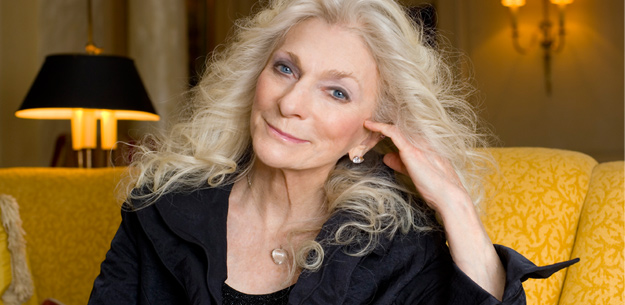
An Evening with Judy Collins

Deborah Sommers, Executive Director at the Modlin Center for the Arts, reflects on artist Judy Collins contributions to the musical world. 
_____________________________________________________________________________________________


A memory from the past: my guitar in hand, reading and singing from my Judy Collins songbook, remembering how much the lyrics and music meant to me. I still have the book! I treasured the beautiful lyrics Judy Collins wrote, and was inspired by the songs that she interpreted from other artists. I always felt that her interpretations of these songs were the quintessential version of those works. Her silky, pure voice still resonates with me when I think of her recordings. Little did I know that years later, I would get a chance to tell Judy Collins how much she influenced my early musical life when I presented her for the first time.
“Who knows where the time goes, who knows where the time goes…”1
Collins was a major voice in the music of the 60s and 70s, and today, she is still producing stunning recordings. Additionally, she has produced multiple records and an Academy-award winning documentary, authored books, appeared on stage and television in theatrical productions, and has interpreted and arranged many major songwriters’ music. Her musical choices have always been quite eclectic and spans folk, rock, art songs, and more. Her renditions of songs from artists such as Bob Dylan, Leonard Cohen, and Stephen Sondheim’s “Send in the Clowns” are exquisite. Her performance of Joni Mitchell’s “Both Sides Now” was the quintessential version, and the list goes on.  Regardless, Collins’ own songs, which are both literal and metaphorical, create strong imagery, allowing each of us to catch glimpses into her life.  

Similar to other folk artists of that era, Judy Collins was also a social activist -- her voice spoke for a generation of people. She championed several issues and political causes such as women’s rights and civil rights.  Today, she still is active in supporting and speaking for UNICEF’s international programs. She is actively touring and giving concerts, giving lectures and talks on topics such as suicide prevention and other areas that have been important to her throughout her life.
“…I’ve looked at life from both sides now,
From win and lose, and still somehow,
It’s life’s illusions I recall,
I really don’t know, life at all…”2

I look forward to discovering her choice of songs for the evening’s concert at the Modlin Center. She is an artist whose work and strong presence has traveled along life with us, and I look forward to seeing her again.

1 (Words and music by Sandy Denny taken from Judy Collins songbook)
2 (Music and lyrics by Joni Mitchell, copies from the Judy Collins Songbook.)
_____________________________________________________________________________________________
About Deborah Sommers
As Executive Director of the Modlin Center for the Arts, Deborah Sommers is responsible for the more than 45-event ModlinArts Series, four main stage productions by the University's Theatre and Dance department and the University Players and Dancers, 30 musical performances in the Department of Music's Free Concert Series, plus community events and performances throughout the year. Sommers also directs and teaches the University of Richmond's Arts Management program, and works with faculty across the disciplines and schools to design academic components that coordinate with the Modlin Center's artistic programming.

Prior to joining the Modlin Center, Sommers was director of programming at Fairfield University's Quick Center for the Arts. At the Quick Center, Sommers produced an 80-event season of national and international artists that attracted patrons from across the New York area. She also presented a strong K–12 outreach program reaching 14,000 students with long- and short-term artist residencies in public schools, supervised an internship program for university students, and oversaw a children's theatre summer camp and adult summer festival chorus.

Before joining the Quick Center, Sommers was company manager/administrator of the Performing Arts Center at the State University of New York at Purchase, which presented a 60-event season, presenting and coordinating the professional season programming, artists, and residencies. She also worked for a a number of festivals including the PepsiCo Summerfare Festival, and throughout the years has been a consultant in the performing arts field and managed some artists. 

A graduate of Hunter College with a bachelor's degree in music and education and film, Sommers subsequently earned both an M.B.A. and Doctor of Jurisprudence from Pace University. She is admitted to the New York and Connecticut bars. Currently, Sommers sits on the Board of Directors of CultureWorks, Inc. in Richmond, and sits on various committees at the University and public communities. Previously Sommers has sat on several boards and committees, including the United Nations Development Fund for Women USA-Connecticut Chapter, Fairfield Arts Council, and Connecticut Dance Alliance. Other experiences include working as a legal intern at Pace Investors Rights Clinic, Westchester Human Rights Commission, and Pro Bono Legal Partnership, which serves the legal needs of nonprofits.


Wednesday, February 13, 2013

Production Studies III Showcase, "The Waiting Room"

The University of Richmond Department of Theatre and Dance presents the annual Production Studies III Showcase Thursday, February 14-Saturday, February 16 at 7:30pm and Sunday, February 17 at 2pm in Cousins Studio Theatre. The performance is free but tickets are required and are available here. This year's production is The Waiting Room. Associate Professor of Theatre and Chair of the Department of Theatre and Dance, Dorthy Holland, offers a preview of the performance:
______________________________________________________________

Remember the last time that you were in a doctor’s waiting room?  Or a hospital waiting room?  What was it like? Interminably dull? Mind-numbing? Soul-draining?  Not so in this Waiting Room!  Here, you will encounter a charming Chinese woman from the 18th century who is having trouble with her bound foot. You will also see an elegant woman from the 19th century who is looking for medical help to cure her “hysteria.”  And then there is the out-spoken Wanda, a 20th century woman whose latest breast implant surgery did not go exactly according to plan.  But not everyone in and around the waiting room is suffering from some physical ailment. There are charismatic drug company executives who are visionaries striving to find the cure for cancer, altruistic and inspirational doctors, feisty nurses who dispense philosophical insights along with patient care, and eager bureaucrats doing their diligent best to help make this all work.  This is most fantastical and exciting waiting room, a place where dreams and hopes and aspiration tangle in a very moving and provocative comic drama. With an emphasis on the comic.  And the fantastical.   And the real.  Oddly, all are intimately related in this play, an artful and beautifully-designed production.

What is equally exciting about this production is that the Director, Lighting Designer, Set Designer, Costume Designer, and the whole creative team are all students.  Senior Mary McDonnell, a double business administration and theatre arts major, is the Director; senior Heather Dunlap, a double physics and theatre arts major, is the Lighting Designer; junior Maggie McGrann, a double theatre arts and English major, is the Costume Designer; junior Kathryn Cohen, a theatre arts major and business administration minor, is the Set Designer; and senior DeShawn Holmes, a theatre arts major, is the Sound Designer.  Senior Hannah Rhodes, a leadership studies and theatre arts double major, served as Dramaturg and Props Master for the production; senior Bryce Carson, an interdisciplinary studies major, served as PR and Business Manager, and senior Barbara Vaughan is the Production Stage Manager. 

______________________________________________________________
Dorothy Holland is associate professor of theatre and associate professor of women, gender, and sexuality studies. Dr. Holland is also chair of the Department of Theatre and Dance, where she teaches a range of courses: Production Studies, Theatre History, 20th-century Acting Styles and Theories, Physical Theatre, Staging Gender, Musical Theatre, and the First Year Seminar.  Her research explores the intersections of performance theory, feminist theory, and contemporary theatre practice. 

Holland has been a professional actor and director for over 30 years; she has performed leading roles on Broadway, Off-Broadway, in national tours, and in regional theatres throughout the country.  Since she came to the University of Richmond in 1999, Holland has directed a variety of main-stage productions: All My Sons (Arthur Miller), How I Learned to Drive (Paula Vogel), Mother Courage and Her Children (Brecht), Company (Sondheim), Gypsy (starring Lorna Luft), The Furies (Aeschylus), Amadeus (Peter Shaffer), Small Tragedy (Craig Lucas), Fiddler on the Roof, The Skin of Our Teeth (Thornton Wilder), The Madwoman of Chaillot (Giraudoux), and Rent (Jonathan Larson). She has also performed leading roles in several local productions: Prospero in The Tempest,  Emily Stilson in Arthur Kopit's Wings, Evelyn in Tales of the Lost Formicans, and the Catwoman in By the Bog of Cats  -- all directed by Walter Schoen.  She was also the Old Woman in Ionesco’s The Chairs, directed by Paolo Emilio Landi, appeared in The Laramie Project for Barksdale Theatre, was Vada Love Powell in The Exact Center of the Universe and Susan Strasberg in the premier of Alex Finlayson's Misfits, also for Barksdale Theatre.

Sunday, September 16, 2012

The Philip Glass Festival


Deborah Sommers, Executive Director at the Modlin Center for the Arts offers an introduction to and overview of the Philip Glass Celebration.

__________________________________
Philip Glass’ 75th birthday year is being celebrated worldwide in a host of ways. Even his larger work such as his operas have been remounted and are touring internationally.  At the Modlin Center for the Arts, we decided to present a festival of events to mark this occasion. Since Glass, however, is such a prolific composer, choosing what to present was not an easy task.

Besides being Philip Glass’s 75th birthday year, the Modlin Center is hosting this celebration for a number of reasons. Philip Glass’ compositions not only reflect his own creativity and pioneering work, which have influenced many artists and composers, but also his collaborative efforts which extend across disciplines and genres including music, dance, film, visual arts, poetry, and more. Collaboration is a key element in much of Glass’ work. Therefore, a vast majority of his compositions were written in conjunction with, and to be performed with, other art forms. Since Glass’ work extends into other genres and film, it is widely recognizable. Therefore, it was a great opportunity to work with such a talented and creative living composer, and to share this occasion with him.

Personally, the idea of creating a Glass celebration intrigued me as I have followed his work for many years.  I have been directly influenced by his compositions as an artistic director working in the performing arts, and in developing my own skills as an artist. I have worked with many who were also directly influenced by Philip Glass, and who have created work based on his music. In addition, this is a great opportunity for me to create a celebration of events that will allow us to explore and share with Philip Glass -- his thoughts and experiences on the idea of creativity and collaboration.

Through Philip Glass’ operas, symphonies, compositions for his own Philip Glass Ensemble, and his wide-ranging collaborations with other artists ranging from Twyla Tharp to Allen Ginsberg, Woody Allen to David Bowie, Philip Glass has had an extraordinary and unprecedented impact upon the musical and intellectual life of his times. His many associations, both personally and professionally, with leading rock, pop, and world music artists, date back to the 1960s. Including the beginning of his collaborative relationship with artist Robert Wilson. Indeed, Glass is the first composer to simultaneously win a wide, multi-generational audience in the opera houses, concert halls, within the dance world, in film, and in popular music.
In the past 25 years, Glass has composed more than 20 operas; eight symphonies; two piano concertos and concertos for violin, piano, timpani, and saxophone quartet and orchestra; soundtracks to films ranging from new scores for the stylized classics of Jean Cocteau to Errol Morris’s documentary about former defense secretary Robert McNamara; string quartets; and a growing body of work for solo piano and organ. He has collaborated with Paul Simon, Linda Ronstadt, Yo-Yo Ma, and Doris Lessing, among many others. He presents lectures, workshops, and solo keyboard performances around the world, and continues to appear regularly with the Philip Glass Ensemble.
We will be showing three films, which will be accompanied by an introduction from the University’s Department of Music faculty. The films were chosen because they are either about Philip Glass or are excellent examples of his film scores that reflect the idea of creativity and collaboration.  In addition, Philip Glass will be speaking about his unique approach to creation in our Artist Voices series entitled “Collaboration and the Creative Process.” Glass will also perform in concert with the violinist Timothy Fain.  University of Richmond’s Grammy-winning ensemble-in-residence, eighth blackbird, will perform an evening concert of works by Glass and composers influenced by Glass. With all of these events, we have created many wonderful opportunities for students from all schools and the community to discuss these ideas and concepts with Glass.

The Philip Glass Festival will provide a unique opportunity to meet a composer who has had a profound artistic impact, and who has had many interesting and ground-breaking collaborations.  We are delighted that Phillip Glass was able to take the time from his busy celebration year to come to the Modlin Center and to share in a number of events with the University of Richmond and with the community. 
____________________________________
The Philip Glass Festival begins Sunday, September 16 at 3pm in Camp Concert Hall with the film Glass: A Portrait of Philip in Twelve Parts, and will continue through October 5.  The festival will include films, lectures, a ModlinArts Artist Voices Series presentation with Philip Glass and Philip Glass and Tim Fain in concert. Visit modlin.richmond.edu for a full schedule of events.  


 About Deborah Sommers
As Executive Director of the Modlin Center for the Arts, Deborah Sommers is responsible for the more than 45-event ModlinArts Series, four main stage productions by the University's Theatre and Dance department and the University Players and Dancers, 30 musical performances in the Department of Music's Free Concert Series, plus community events and performances throughout the year. Sommers also directs and teaches the University of Richmond's Arts Management program, and works with faculty across the disciplines and schools to design academic components that coordinate with the Modlin Center's artistic programming.

Prior to joining the Modlin Center, Sommers was director of programming at Fairfield University's Quick Center for the Arts. At the Quick Center, Sommers produced an 80-event season of national and international artists that attracted patrons from across the New York area. She also presented a strong K–12 outreach program reaching 14,000 students with long- and short-term artist residencies in public schools, supervised an internship program for university students, and oversaw a children's theatre summer camp and adult summer festival chorus.

Before joining the Quick Center, Sommers was company manager/administrator of the Performing Arts Center at the State University of New York at Purchase, which presented a 60-event season, presenting and coordinating the professional season programming, artists, and residencies. She also worked for a a number of festivals including the PepsiCo Summerfare Festival, and throughout the years has been a consultant in the performing arts field and managed some artists. 

A graduate of Hunter College with a bachelor's degree in music and education and film, Sommers subsequently earned both an M.B.A. and Doctor of Jurisprudence from Pace University. She is admitted to the New York and Connecticut bars. Currently, Sommers sits on the Board of Directors of CultureWorks, Inc. in Richmond, and sits on various committees at the University and public communities. Previously Sommers has sat on several boards and committees, including the United Nations Development Fund for Women USA-Connecticut Chapter, Fairfield Arts Council, and Connecticut Dance Alliance. Other experiences include working as a legal intern at Pace Investors Rights Clinic, Westchester Human Rights Commission, and Pro Bono Legal Partnership, which serves the legal needs of nonprofits.